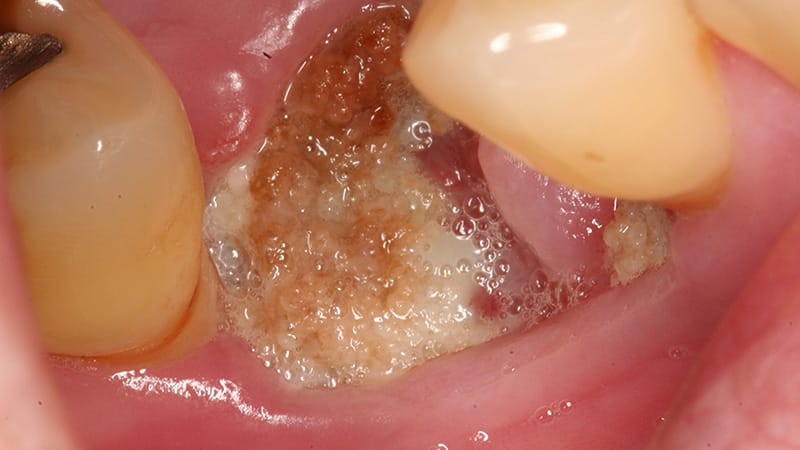
Is jawbone damage common with Bisphosphonates?
No—jawbone death was rare at standard doses, with 0.38 cases per 1,000 years of treatment in the study.
The study compared people starting Bisphosphonates, medicines that slow bone breakdown, with people starting other bone medicines. Findings were presented at the 2026 American Society for Bone and Mineral Research meeting. Researchers grouped people by when they started treatment to make comparisons fairer. They observed treatment use rather than assigning medicines.
The reported rate was 0.38 cases for Bisphosphonates versus 0.36 for Denosumab, another medicine that slows bone breakdown. Both rates covered 1,000 years of treatment added across people. That means fewer than one case per 1,000 combined treatment years—not a person's lifetime risk.
A separate analysis tracked medicine switches and restarts. It included 163 new cases of jawbone death. The Denosumab rate rose to 0.71 per 1,000 treatment years. Still, the comparison did not show a clear difference between these two medicines. The researcher said prior Bisphosphonates use and longer total treatment likely explained that higher rate.
That analysis also suggested lower risk with Selective Estrogen Receptor Modulators, medicines that affect how estrogen acts in the body. But few cases made that finding less certain. Rare does not mean impossible, and the results do not prove every medicine has identical risk.
For BioSocial members, treatment history adds context when comparing notes. Start dates, switches, and total months of use help tell that story. Members tracking Bone Mineral Density can keep those results alongside their medicine timeline. This report focused on jaw safety, not changes in those numbers.
What has your experience been tracking bone results and side effects over time?
Comments
No comments yet.