Does a palms-up grip work your biceps more during dumbbell curls?
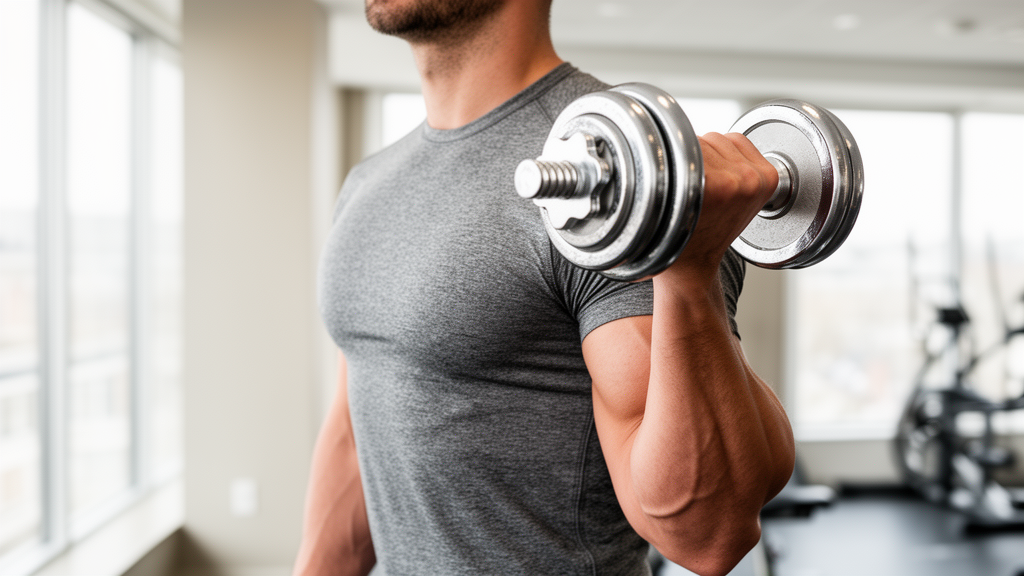
A palms-up grip produced the most biceps electrical activity among three dumbbell curl grips tested.
Polish researchers compared palms-up, palms-facing-in, and palms-down grips in a study published in Scientific Reports. People in the study performed dumbbell curls under a set exercise routine. Sensors on the skin measured electrical signals from the biceps during the curls. The provided report does not give their ages, training backgrounds, or total number.
Palms-up curls ranked highest, palms-facing-in curls came next, and palms-down curls ranked lowest. The researchers found clear differences across all three grips. However, the report does not say how large those differences were. That leaves us with a ranking, not a percentage advantage for one grip.
The key limit is simple: more electrical activity is not proof of more muscle growth. The study measured what happened during one exercise, in one muscle. It did not track changes in biceps size over weeks or months. It also cannot show whether the same ranking applies to other exercises or groups of people.
For the Hypertrophy Focused Training community, grip is a useful detail to include in training logs. Notes on grip, dumbbell load, sets, and reps could make comparisons more useful. Members tracking Segmental Muscle Mass can keep those results alongside their logs. Still, a change in that number would not prove one curl grip caused it. Comparing notes over time can help separate a workout feeling from a measured change.
What differences have you noticed in your reps, loads, or arm measurements when using different curl grips?
Comments
No comments yet.