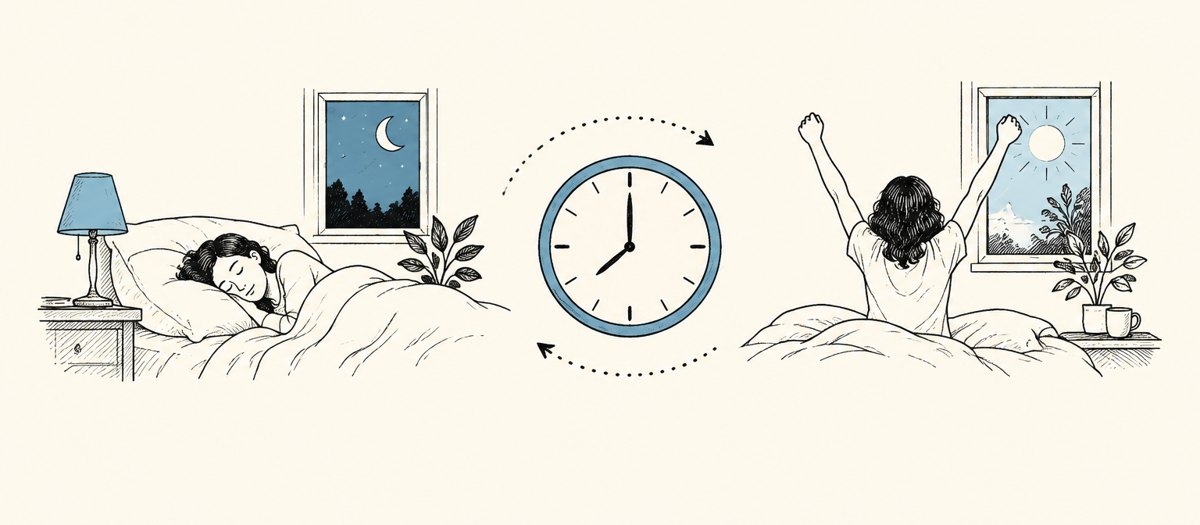
Going to bed and waking up at the same times every day, including weekends. Often recommended to help anchor your body clock, improve sleep quality, and support daytime alertness.
Yes—irregular sleep timing was linked to worse mental health in a study of about 23,000 people.
Researchers at UC San Francisco and UC San Diego examined smart-ring records. The people in the study averaged 46 years old. Just under half we
It may: data from over 1 million nights linked irregular sleep to a higher risk of heart attack, stroke, and heart failure.
That makes [Consistent Sleep Schedule](/health-practices/sleep-recovery/consistent-sleep-schedule) worth a closer l