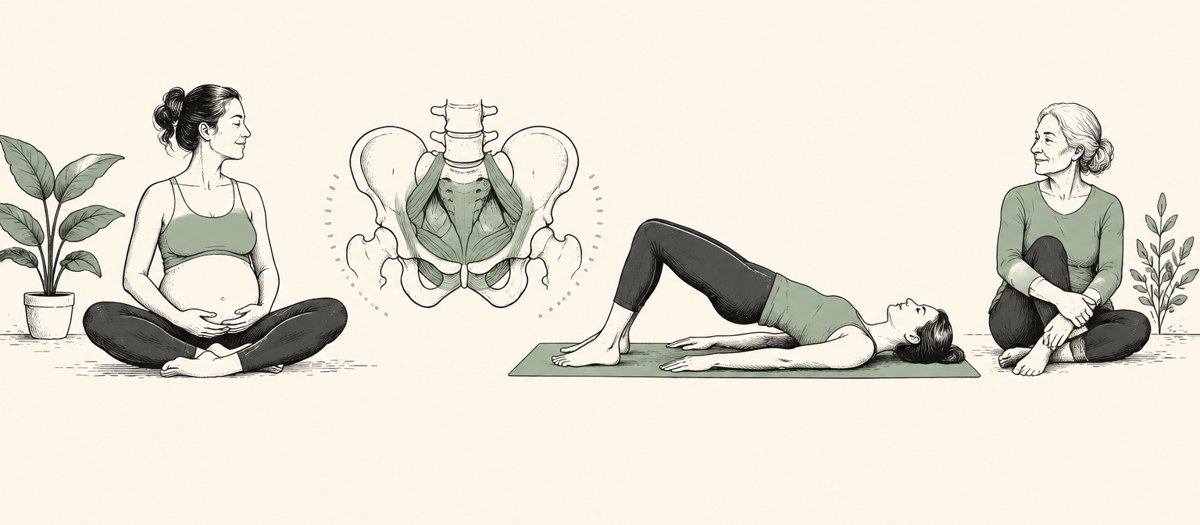
Can Pelvic Floor Training stop pee leaks during exercise?
Yes—56% of women doing the exercises reported being cured of activity-related pee leaks, compared with 6% who had no treatment.
The ProMotion article highlights a 2018 Cochrane review that brought together several studies. It compared Pelvic Floor Training with no treatment in women with stress incontinence. That means pee leaks caused by pressure on the bladder. Jumping, lifting, coughing, sneezing, and laughing can all trigger these leaks. Here, “stress” means physical pressure, not emotional stress.
The review found benefits beyond complete relief. 74% reported being cured or improved, compared with 11% without treatment. These were reports from women in the studies, not a promise for everyone. Still, the results suggest that leaks do not have to be something women simply accept.
The article also points to United Kingdom guidance on supervised training. It recommends at least three months as the first treatment for women with these leaks. The emphasis is on guided practice, rather than only receiving an exercise handout. That three-month recommendation is not a deadline by which everyone becomes leak-free.
For BioSocial members, this offers a useful way to frame progress. A weekly count of leak episodes could make changes easier to see. Notes about triggers and completed practice sessions could add context. Comparing similar activities over time may be more useful than remembering one good or bad day.
Community notes can also capture partial progress, not just whether leaks have stopped entirely. What changes have you noticed in your leak frequency or triggers since starting guided practice?

Comments
No comments yet.