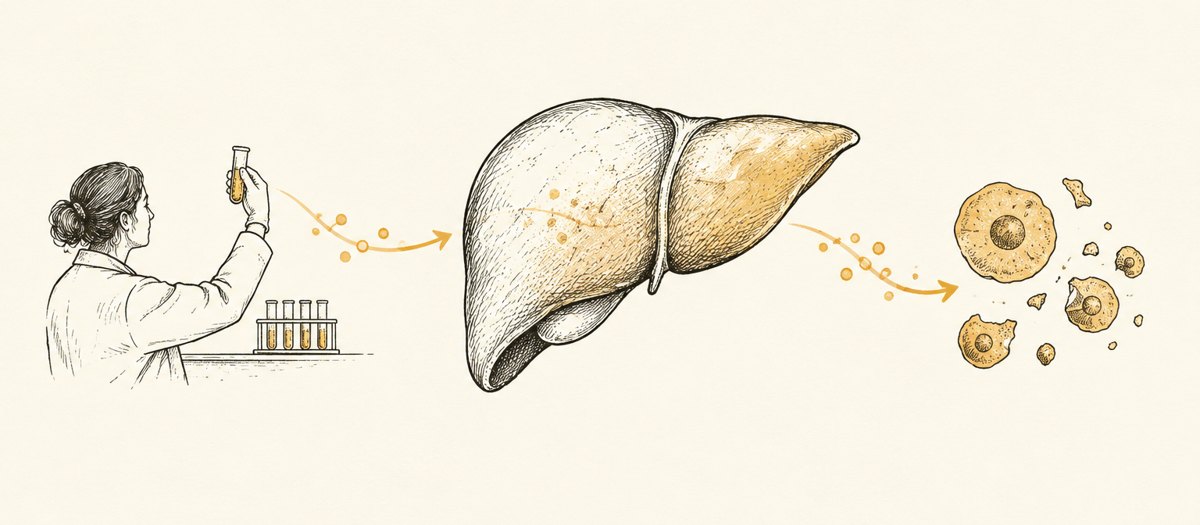
Can liver blood tests flag scarring risk with type 2 diabetes?
Higher liver blood test levels were linked to liver scarring in a study of 1,355 adults with type 2 diabetes and fatty liver.
Researchers reviewed hospital records from Nanjing Drum Tower Hospital in China. The records covered 2018 through 2025. Everyone in the study had both conditions and a liver stiffness scan. The team used a scan reading of at least 8 kilopascals, a stiffness unit, to flag substantial scarring. In total, 584 people, or 43.10%, met that cutoff.
Higher AST (Aspartate Aminotransferase) was linked to greater odds of meeting the scarring cutoff. This link remained after accounting for other measured factors. Older age, more liver fat, higher GGT (Gamma-Glutamyl Transferase), and high Uric Acid were also linked to scarring. These blood tests measure substances found in the body. ALT (Alanine Aminotransferase), another liver blood test, showed a similar link when tested instead.
The wider test pattern matters more than one result. This study found links, not proof that higher blood levels cause scarring. It also focused on hospitalized adults with both conditions. The 43.10% figure does not describe everyone with diabetes or an elevated liver test.
For BioSocial members, this supports comparing bloodwork with the rest of their liver results. Tracking test dates and any liver scan findings can give shared numbers more context. Comparing notes with members who have similar health histories may be more useful than comparing isolated results. The study did not show that lowering one blood test reverses scarring.
What patterns have you noticed between your liver blood tests and any liver scan results?
Comments
No comments yet.