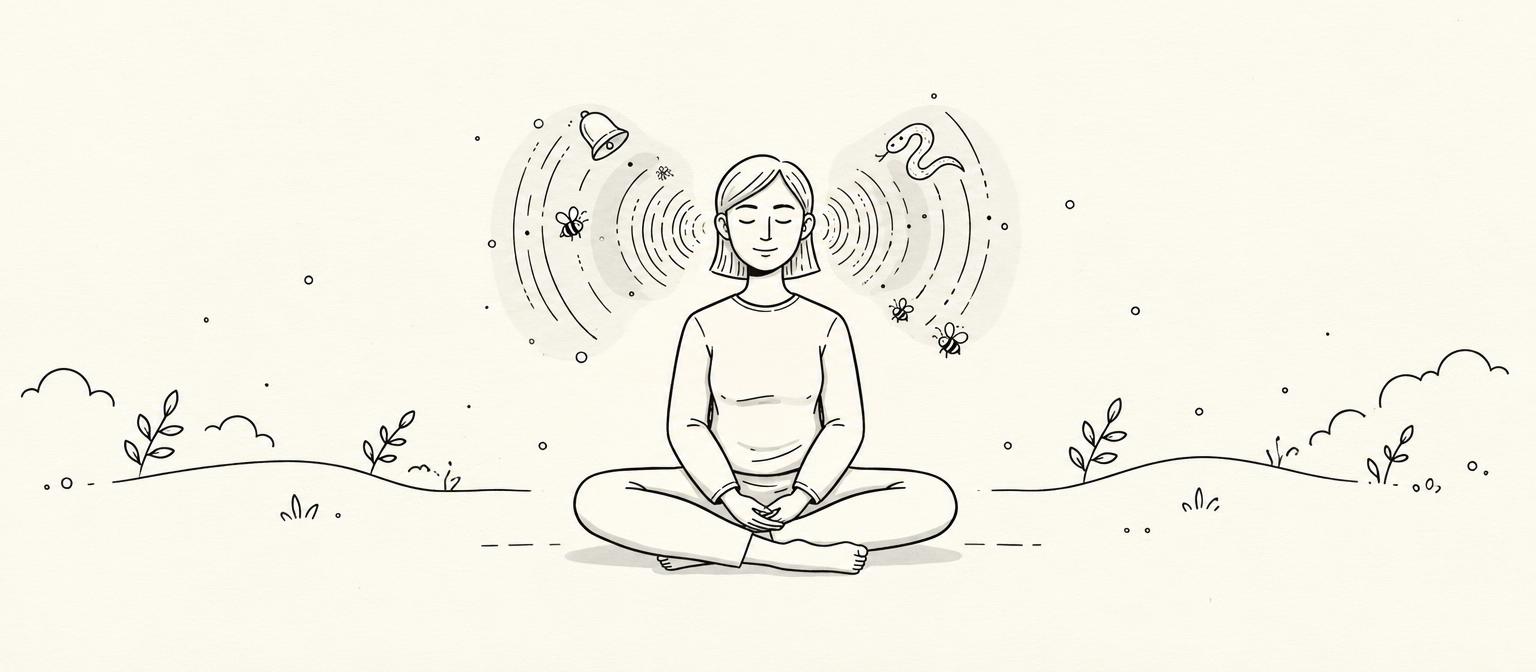
Is ringing in the ears linked to how the brain hears sound?
The findings suggest so: about 95% of people with the condition also hear a brief sound illusion used to study it.
The article covers a collection of studies in Frontiers in Neuroscience. Their main message: Ringing in Ears (Tinnitus) involves more than the ears alone. How the brain handles sound, and the body's stress response, may matter too.
One study explored the Zwicker tone, a faint sound that quickly fades. It can happen after someone hears noise with certain pitches removed. About 42% of people with normal hearing perceive this tone. The article reports that around 95% of people with the condition experience it.
Both experiences involve hearing a sound without an outside source. The perceived sound falls within the missing range of pitches. Researchers suggest this brief illusion could help them study ongoing phantom sounds. It is a research clue, not a proven treatment.
Other findings pointed to stress responses during noise exposure. A stress-related substance in saliva was elevated across people with the condition, regardless of hearing status. Women reported more noticeable symptoms and greater difficulty in moderately noisy and loud settings. Reporting habits may partly shape those differences. The excerpt does not give study sizes or exact stress-test values.
For BioSocial members, this offers a reason to track context alongside symptom ratings. Notes could pair daily ratings with Environmental Sound Level readings and how stressful the day felt. Comparing similar days may help members spot patterns worth sharing. Those patterns would not prove what caused a change.
What patterns have you noticed between noisy settings, stressful days, and your symptom ratings?
Comments
No comments yet.