
Can tremor tracking reveal more than how much you shake?
Yes—in a study of 66 people, detailed movement tracking found changes beyond how large the shaking movements were.
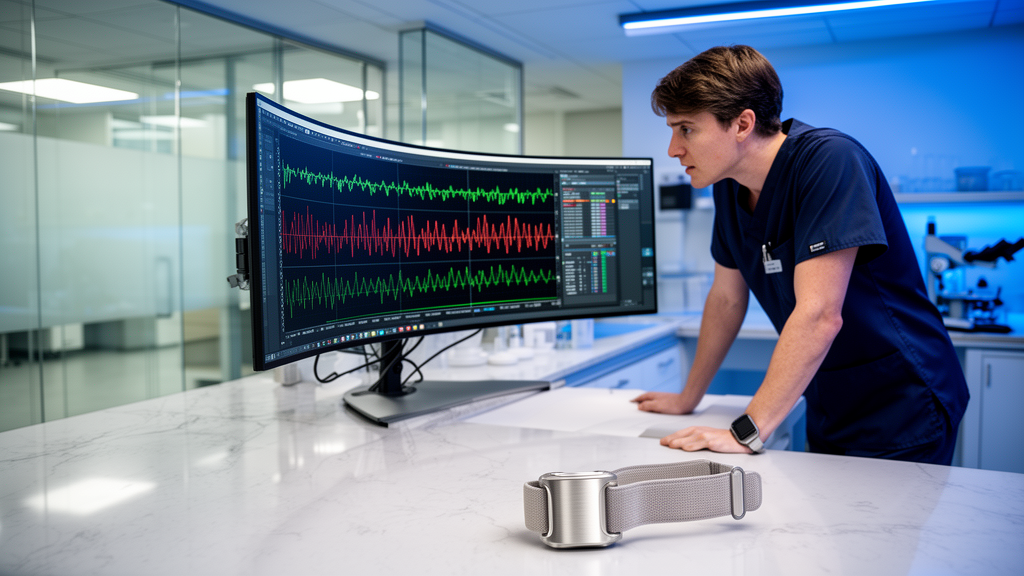
For the [Tremors / Shakiness]( /symptoms/neurological-cognitive/tremors-shakiness) community, the key finding is about how symptoms are measured. Researchers used sensitive motion sensors that recorded movement in three directions. Computer tools then searched those recordings for patterns. Different treatments and caffeine produced distinct changes that a simple measure of movement size could miss.
The study observed three groups across four conditions. It included 23 people with Parkinson’s disease receiving levodopa, a medicine used for Parkinson’s. Another 20 had an amplified form of normal, fine shaking and received caffeine. The remaining 23 had essential tremor, a condition that causes repeated shaking. Of those, 13 were assessed with propranolol, a medicine used to reduce shaking. Ten were assessed with deep brain stimulation, which uses electrical pulses in the brain.
The main takeaway: movement size does not tell the whole story. The report describes different patterns, but gives no percentage improvements or accuracy scores. It also does not show that one treatment worked best. These were different groups with different conditions, not a shared test of competing treatments.
For members, this offers a useful way to think about symptom logs. A daily rating can capture one part of the experience. Notes about timing, tasks, and changes in routine can add context. Those notes do not replace the study’s detailed sensor recordings. Still, comparing your own ratings over time may make community conversations more useful. Sharing the context behind a number matters, too.
What have your own logs revealed that a single daily symptom rating missed?
Comments
No comments yet.