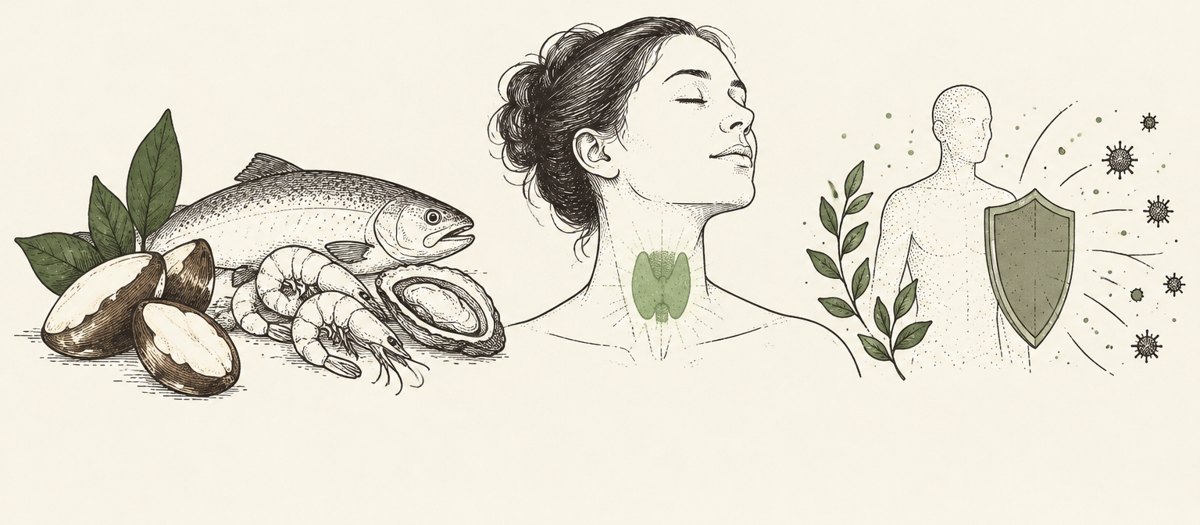
Is taking more Selenium always better for your health?
No—Selenium can help protect cells at normal levels, but higher levels can damage them, according to a review.
The review examined 20 years of work on organic Selenium, forms bound to carbon-containing compounds. Published in Molecular Biology Reports, it covered cell protection, disease, and cancer. It drew on lab studies and human population evidence, including findings from China. This was not a single study testing one supplement dose in people.
The main finding was that more is not always better. At levels normally found in the body, the mineral supports defenses against cell damage. At higher levels, it can instead drive damage and kill cells. The review describes a pattern where both too little and too much can pose problems.
Some lab findings suggest possible uses in cancer treatment. But those results have not yet established effective treatments for people. The supplied report gives no exact dose range or blood-level target.
Starting levels also matter. Evidence from China linked regional differences largely to uneven amounts in soil. Age, smoking, and alcohol use had smaller effects on starting levels. The authors also point to dose, chemical form, and genetic differences. These factors may help explain why supplement studies reach different conclusions.
For BioSocial members, this makes context useful when comparing notes. A supplement dose alone does not tell the whole story. Logs that pair the product form and dose with available bloodwork offer more context. Keeping starting results alongside later results can make community comparisons clearer. Still, a change in one person's numbers cannot prove what caused it.
What have you noticed when comparing your Selenium routine with your bloodwork over time?
Comments
No comments yet.