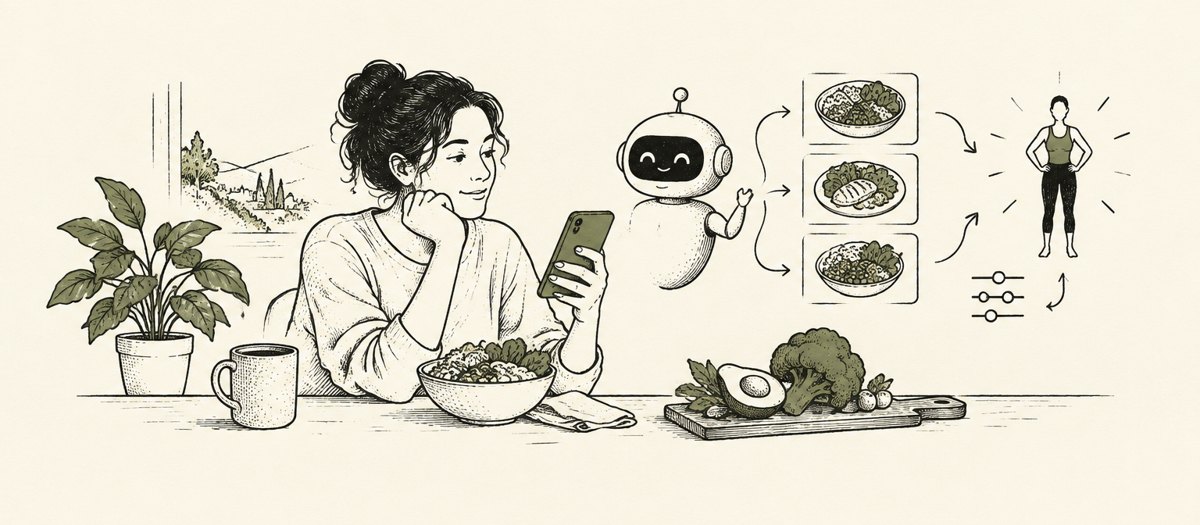
Does how I ask an AI chatbot change its nutrition advice?
Yes—across 12 studies, the instructions given to health chatbots shaped their advice, though testing with real users was scarce.
That matters for members using AI Nutrition Coaching to help plan meals. The review covered 12 published studies checked by other researchers. All were published through October 2025. They looked at chatbots used for nutrition, medicine use, mental health, and physical activity. This was a review of existing work, not a new test with one group of people.
The main finding was that how instructions are written matters. These instructions, often called prompts, help shape the answers a chatbot gives. The authors identified prompt design as a key factor developers can change. But the studies used different methods, making their findings hard to compare. Very little testing involved real users in everyday settings.
That leaves an important gap: better chatbot answers do not prove better health results. The report gives no single figure for how much advice improved. It also does not establish one best way to ask nutrition questions. More real-world testing is needed to learn whether these tools safely support lasting habits.
For our community, this makes the original question worth saving alongside the answer. When comparing meal-planning experiences, members could share what they asked and what changed. Notes about budget, food preferences, and cooking time could make those comparisons more useful. Members tracking Protein Intake could also compare suggested amounts with their own food logs. That keeps the focus on what happened, not just whether an answer sounded convincing.
What changes have you noticed in a chatbot’s food advice after changing how you asked?

Comments
No comments yet.