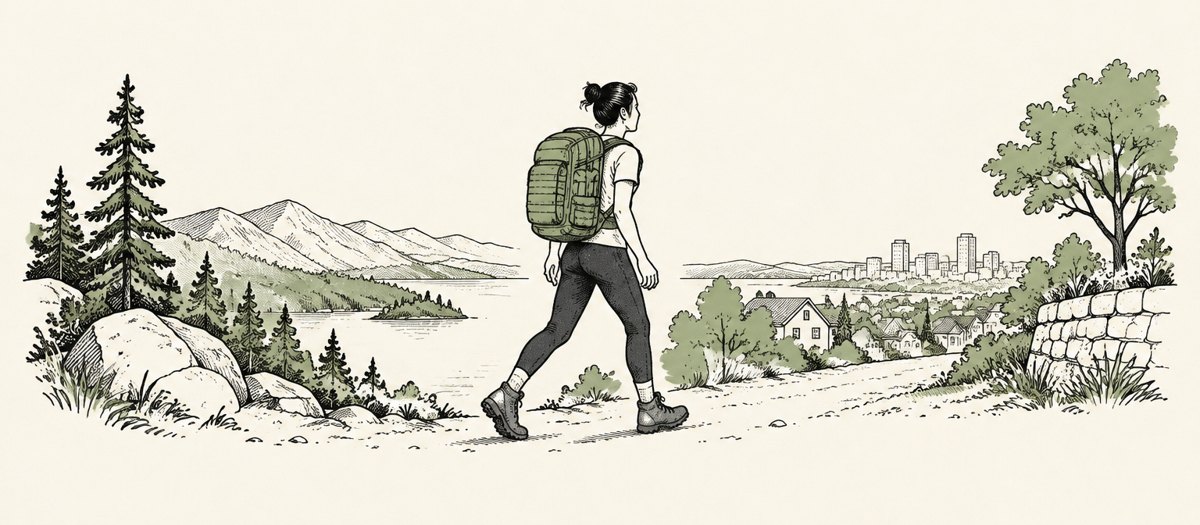
Does rucking offer more benefits than regular walking?
Adding a loaded backpack makes walking harder work, but direct evidence for extra long-term benefits is still limited.
DAREBEE’s article explains Rucking through evidence on walking and carrying loads. The main takeaway is simple: extra load challenges your heart, legs, and trunk. But most of the evidence comes from related activities, not backpack walking itself.
One study covered women aged 50 to 75. They did Weighted Vest Training three times weekly for nine months. Their vests became heavier over time. Lower-body strength rose by 16% to 33%. Power, meaning how quickly they could produce force, rose by 13%. Balance improved too.
A small follow-up tracked women for five years. Those who continued using vests and jumping maintained hip Bone Mineral Density. Those who stopped lost about 4%. These were not tests of backpack walking alone. The results cannot show how much benefit comes from carrying a backpack.
The article also describes strong evidence for walking itself. Across 15 studies, nearly 47,500 adults were followed for about seven years. Those who walked most had about half the risk of dying during follow-up. That comparison does not establish an added benefit from carrying a load.
For BioSocial members, this makes personal tracking more useful than expecting those same gains. A shared log could include pack load, minutes, route, and effort. Tracking Daily Steps alongside those details can help separate more walking from heavier walking. Comparing similar routes over time also gives community discussions useful context. Personal changes are worth sharing, without treating them as proof of cause.
What changes have you noticed in your effort or endurance since adding a backpack?

Comments
No comments yet.