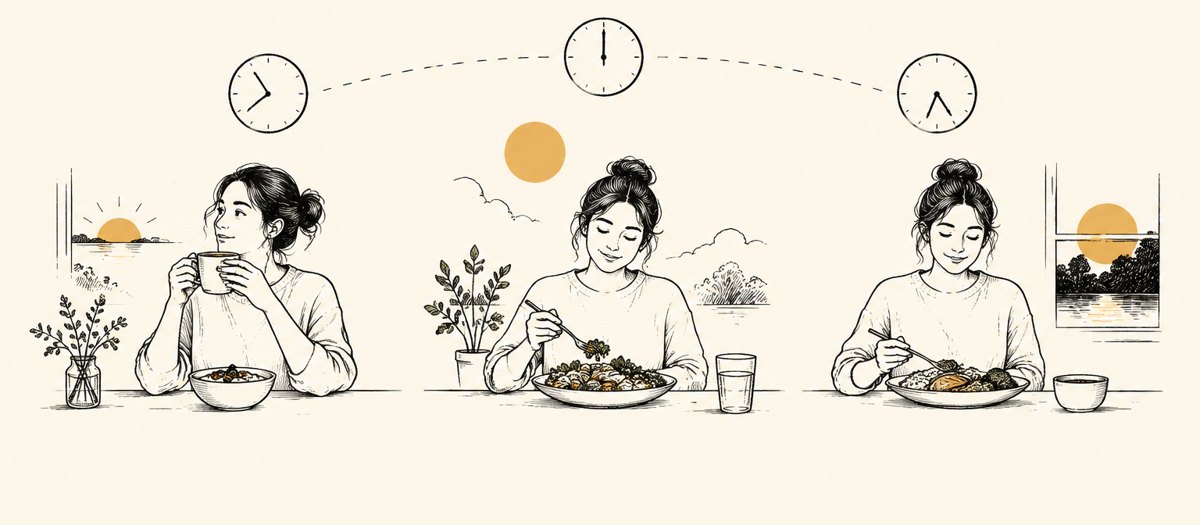
Can eating only during the day protect mood on night shifts?
Daytime-only eating may protect mood: a 19-person study found no clear mood worsening during lab-made night shifts in that group.
The article describes a 2022 study with healthy volunteers. They followed tightly controlled schedules designed to mimic working at night. One group ate during both the day and night. The other ate only during daytime hours.
In the day-and-night eating group, depression-like mood ratings rose by 26.2%. Anxiety-like mood ratings rose by 16.1%. Both changes were measured against each person’s starting ratings. Neither measure rose clearly in the daytime-only group. These were mood ratings, not new diagnoses of Depression / Low Mood or Anxiety.
Food timing helps set daily rhythms in organs throughout the body. Light remains the strongest signal for the body’s main clock. The findings suggest meal timing may affect mood when that clock gets disrupted.
For our Consistent Meal Timing community, one distinction matters: this study tested daytime versus day-and-night eating. It did not show that regular meal times alone protect mood. It also involved just 19 healthy people in a lab. Studies with actual shift workers are still needed.
For members already tracking meals, mood notes could add useful context. Meal times, work hours, and daily mood ratings offer details to compare. Sharing those records may help the community spot patterns worth exploring. They cannot prove that food timing caused a change. The best eating schedule for mental health is still unclear.
What have you noticed about your mood when meal times change, especially around night shifts?
Comments
No comments yet.