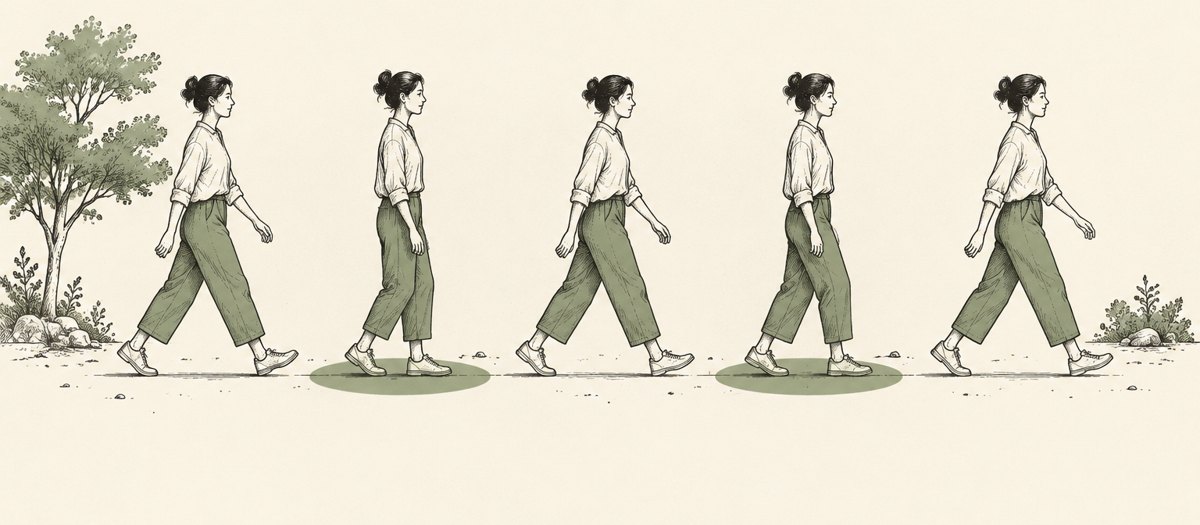
Is being overweight linked to more time on both feet when walking?
Yes—in a study of 710 older adults, being overweight was linked to spending more of each walking cycle with both feet on the ground.
That measure is called Double Support Time. It describes the share of a walking cycle when both feet touch the ground. The people in the study were older adults living in the community. Researchers used walking tests, wearable shoe insoles, body measurements, and brain scans.
The study defined overweight or obesity as BMI (Body Mass Index) of 24 or higher. This is a measure based on height and Weight. People in this group spent a larger share of each cycle on both feet. Each foot also stayed on the ground longer. The source did not report the actual difference in seconds or percentage points.
Brain scans offered another clue. This group had more iron in one area of the brain. The researchers estimated that this iron measure explained 8.95%–13.45% of the link between body measurements and walking-phase patterns. That means it might explain part of the connection, not all of it. The findings show a link, not proof of cause. They also do not show that losing pounds would reverse these patterns.
For BioSocial members, these results add context to trends, not a target number. Walking Speed, shoes, terrain, and device placement can affect readings. Comparing similar walks over time can make community notes more useful. This measure alone cannot tell you how good your balance is.
What patterns have you noticed in your Double Support Time, and what walking conditions came with those readings?
Comments
No comments yet.