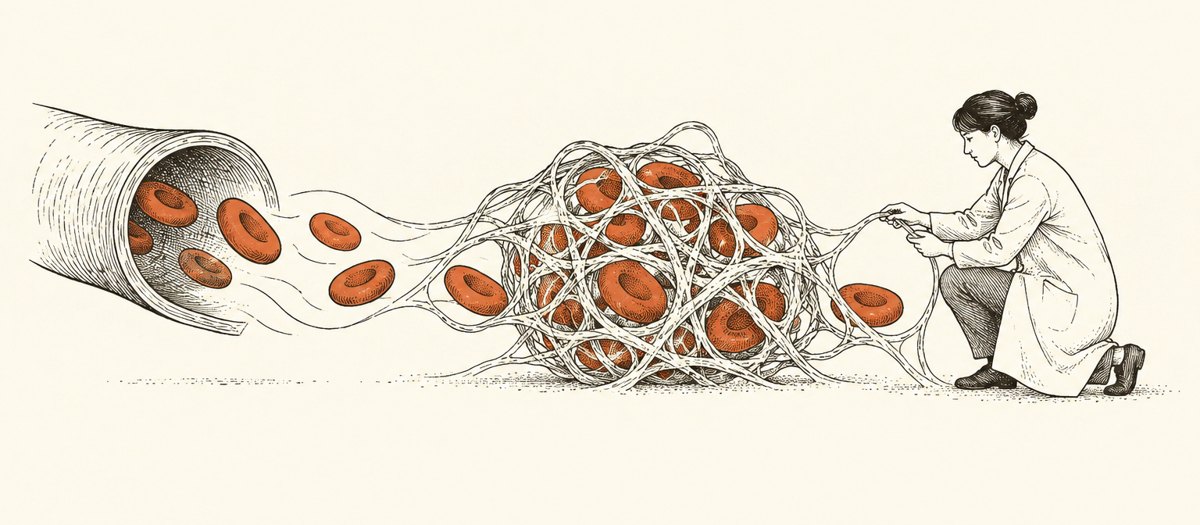
Does tirzepatide lower Fibrinogen levels over time?
Tirzepatide, a weekly drug for diabetes and obesity, showed no consistent link to lower Fibrinogen over 72 weeks.
That finding stood apart from improvements in several other blood tests. Fibrinogen is a blood protein that helps form clots. It can also rise during inflammation. Tirzepatide belongs to the group BioSocial tracks as GLP-1 Medications.
Researchers took a fresh look at blood samples from the SURMOUNT-1 study. This analysis included 392 people with overweight or obesity who completed treatment. They received weekly tirzepatide at 5, 10, or 15 milligrams. A comparison group received a placebo, an injection without the drug. Blood samples were collected at the start, 24 weeks, and 72 weeks.
At 72 weeks, several inflammation tests showed clear drops compared with placebo. hs-CRP (High-Sensitivity C-Reactive Protein) fell by 36.9%, 46.9%, and 54.6% across the three doses. IL-6 (Interleukin-6), another sign of inflammation, fell by 25.4%, 27.8%, and 30.2%. But Fibrinogen did not show a consistent pattern. The source summary gives no percentage change for it.
Different blood tests do not always move together. These results do not prove that Fibrinogen never changes with tirzepatide. They also do not show whether these blood changes prevented heart attacks or clots.
For BioSocial members, this supports tracking each result on its own. A drop in one inflammation test does not guarantee another will follow. Sharing dated bloodwork alongside treatment dose and timing can make community comparisons more useful. Those notes describe personal patterns, rather than proving what caused them.
If you have tracked Fibrinogen while taking tirzepatide, how did your results compare with your other blood tests?
Comments
No comments yet.