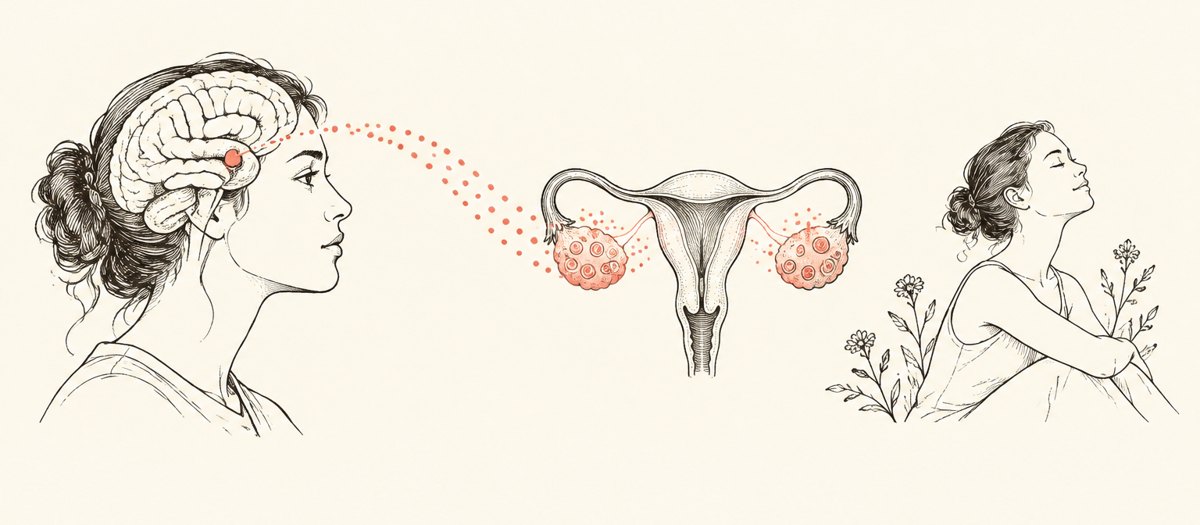
Can low-dose estrogen help when periods have stopped?
Low-dose estrogen was linked to hormone changes over 16 weeks; 52.7% of women reported period-like bleeding, not proven cycle recovery.
The study looked back at records from 55 women at one center. Their average age was 22.5 years. All had stopped having periods because brain signals controlling reproduction had slowed. Each took 0.2 mg of oral estradiol, a form of estrogen, daily. Researchers compared blood tests before treatment and after 16 weeks.
LH (Luteinizing Hormone), which helps control egg release, rose. So did Free T3 (Triiodothyronine), a thyroid hormone, and insulin. Cortisol, a stress hormone, fell. Changes were larger in women whose starting LH (Luteinizing Hormone) was 3 mIU/mL or lower. The report did not give exact sizes for these changes.
For this community, one detail matters: researchers measured FSH (Follicle-Stimulating Hormone), but the summary gives no specific result for it. We cannot conclude that it rose, fell, or stayed unchanged.
Period-like bleeding does not prove regular cycles returned. The 52.7% figure means at least one bleeding episode during follow-up. This small study also lacked an untreated comparison group. It cannot show that estrogen caused the changes or restored long-term reproductive health.
For members tracking hormone results, this highlights the value of context. Starting levels, treatment dates, and bleeding records help tell a fuller story. Comparing those details with community peers may be more useful than comparing one isolated number. The findings offer an early clue, not a clear answer about lasting recovery.
What patterns have you noticed between your hormone blood tests and changes in your periods?
Comments
No comments yet.