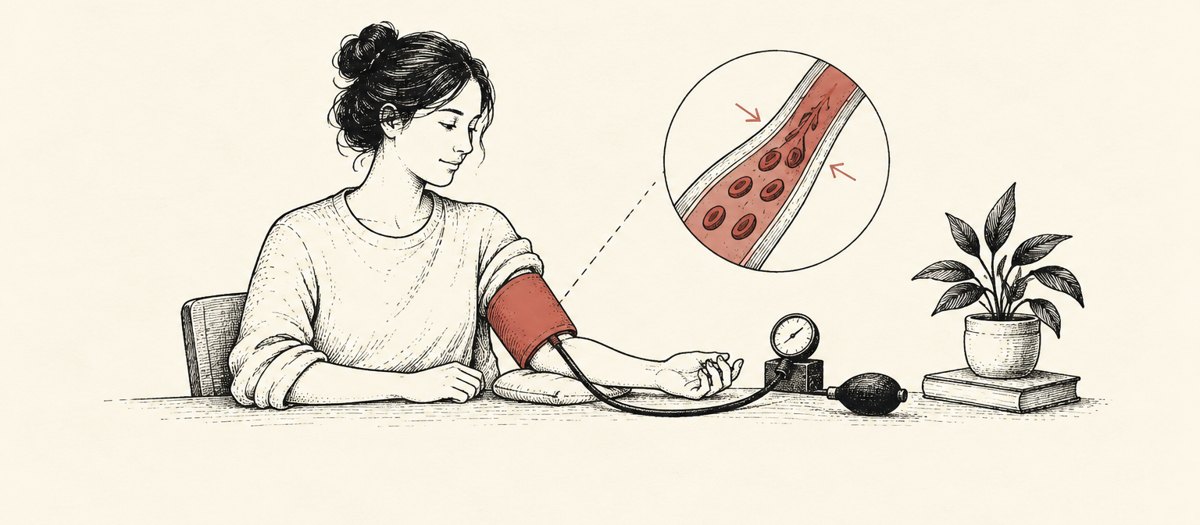
Can caffeine change your blood pressure test results?
Yes—200 mg of caffeine changed blood pressure and heart rate responses during three short tests in healthy young adults.
The study involved 14 people: 11 women and three men, averaging about 20 years old. Each person completed two sessions in a randomly chosen order. One used caffeine; the other used a placebo, a dose without caffeine. Tests involved standing up, straining while trying to breathe out, and holding a handgrip. The grip lasted two minutes at 30% of maximum strength.
Before the breathing-strain test, Blood Pressure — Systolic, the upper number, averaged 141.9 with caffeine versus 129.3 without it. These readings use mmHg, the standard blood pressure unit. After the strain ended, caffeine produced a larger drop: 26.2 versus 14.0 mmHg. The following rise above the starting level was also larger: 37.4 versus 25.3 mmHg. Caffeine also changed heart rate responses and increased resistance to blood flow during handgrip.
For members tracking Blood Pressure — Diastolic, the lower number, there is an important gap. Researchers measured it, but the source gives no specific results for it. This study does not establish that caffeine raised the lower number. It also cannot show what daily caffeine use does over months or years.
The practical takeaway is about comparing readings fairly. Caffeine intake can affect these tests, so it matters when comparing results. For our community, noting caffeine amount and timing alongside readings could add useful context. Comparing repeated readings under similar conditions is more informative than treating one change as a lasting trend.
What patterns have you noticed in your blood pressure readings around caffeine use?
Comments
No comments yet.