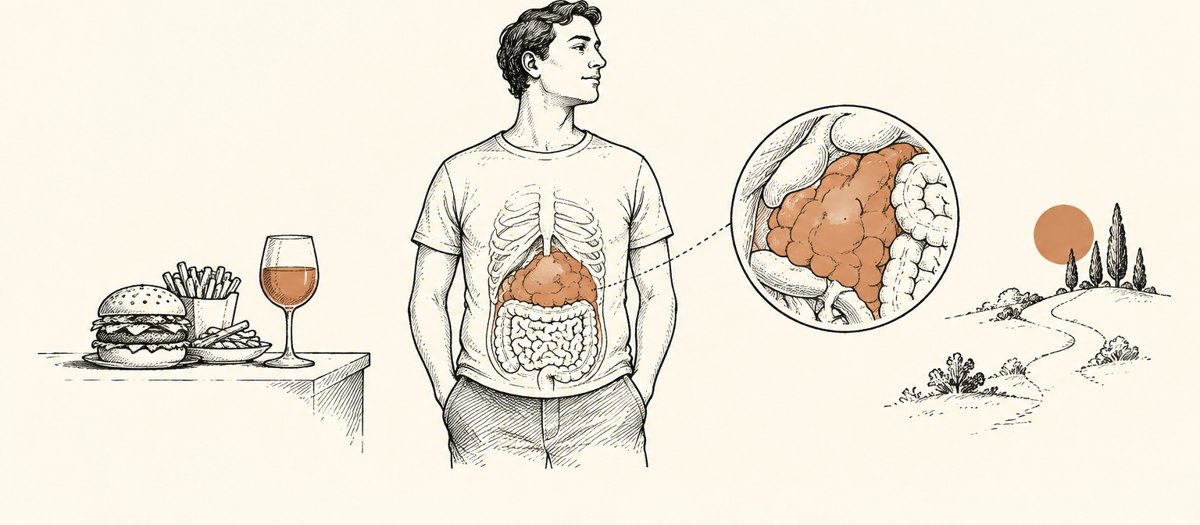
Can scans of belly fat help predict type 2 diabetes?
Yes—adding four belly scan measures improved predictions of type 2 diabetes beyond a risk score and blood test.
The study followed 36,833 people in the UK Biobank. None had type 2 diabetes when they had magnetic resonance imaging (MRI), which takes detailed pictures inside the body. Over a follow-up with a midpoint of 7.38 years, 570 people developed diabetes.
The scans measured Visceral Fat, the fat stored around organs inside the belly. Three other measures helped: liver fat, liver size, and pancreas size. Researchers added these to an existing diabetes risk score. That score had already been expanded with HbA1c (Hemoglobin A1c), a blood test showing average blood sugar over recent months.
A score measuring how well the tool ranked future risk rose from 0.820 to 0.849. Higher scores mean better ranking. The original tool, without the blood test or scans, scored 0.765. The gain came from all four scan measures together, not belly fat alone.
This was about predicting diabetes, not testing ways to prevent it. The tool was checked within the same study group. It still needs testing in other groups. The findings suggest existing scans could offer extra clues about future risk.
For BioSocial members tracking Visceral Fat, the measurement method matters. A home scale gives an estimate. Its rating cannot be directly compared with a scan measurement. Recording the device or scan type alongside your numbers makes community comparisons more useful. Bloodwork can add context, without turning one fat reading into a diabetes forecast.
What have you noticed when comparing your Visceral Fat readings with your bloodwork over time?
Comments
No comments yet.