Can blood count results alone tell if iron stores are low?
Not reliably: four blood count formulas correctly ruled out low iron stores in only 6.7%–35.3% of women without low stores.
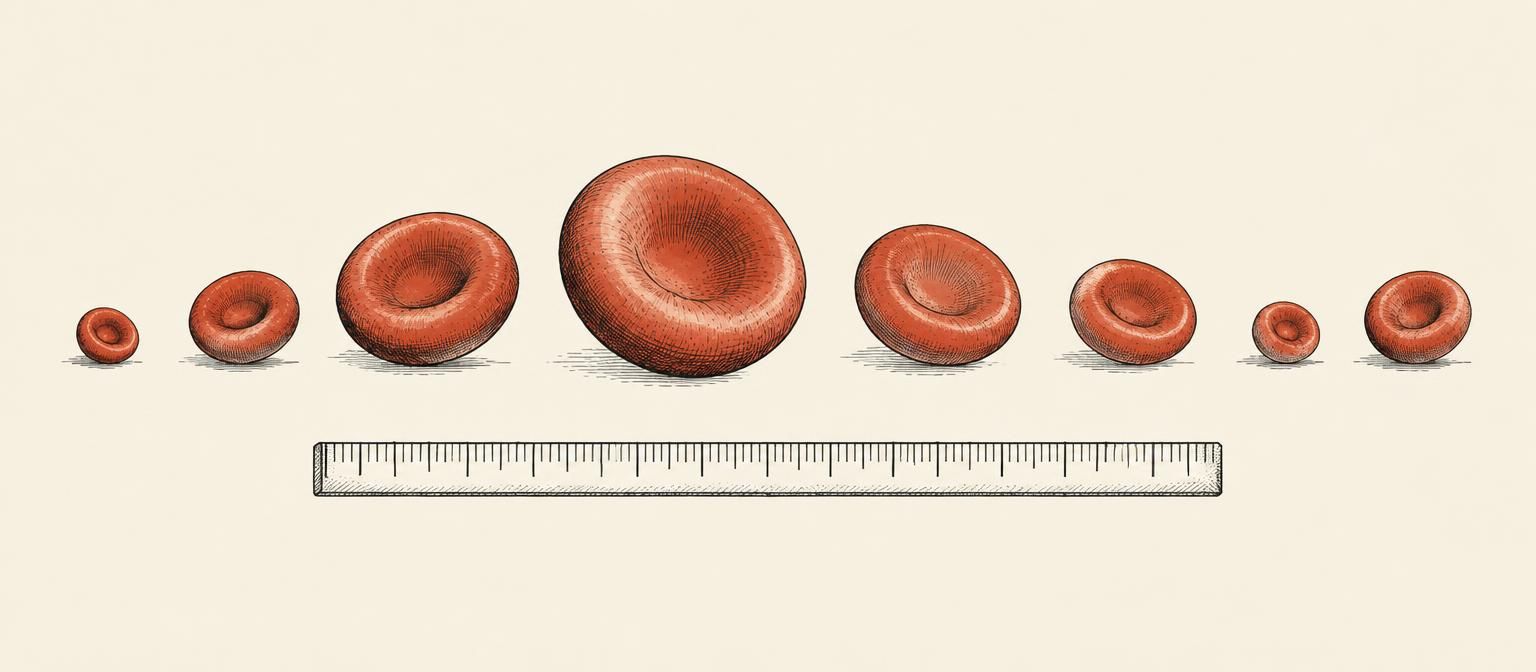
The study used U.S. health survey data from 3,991 nonpregnant women aged 18–49. Of these, 507 had smaller-than-usual red blood cells. Researchers tested four formulas meant to help identify low iron stores. One used RDW (Red Cell Distribution Width), which measures how much red blood cell sizes vary.
The study judged iron stores using Ferritin, a blood marker of stored iron. Levels below 15 ng/mL counted as low. Among women with small red blood cells, 40.8% did not meet that definition. When researchers raised the cutoff to 30 ng/mL, 26.5% still had stores above it.
The formulas caught 92.9%–97.6% of cases with low iron stores. But they also wrongly flagged many women whose stores were not low. The formula using cell size variation performed best at avoiding false flags. Even so, it still mislabeled most women without low stores.
A blood count clue is not the whole picture. These findings apply to women with small red blood cells, not everyone having bloodwork. They also tested formulas, rather than whether one result changed over time.
For BioSocial members, this supports comparing blood count results with stored-iron numbers. Keeping results from the same blood draw together can add useful context. Sharing those paired numbers may also make community comparisons more meaningful than comparing one flagged value alone.
What have your blood count results and stored-iron numbers shown when viewed together?
Comments
No comments yet.