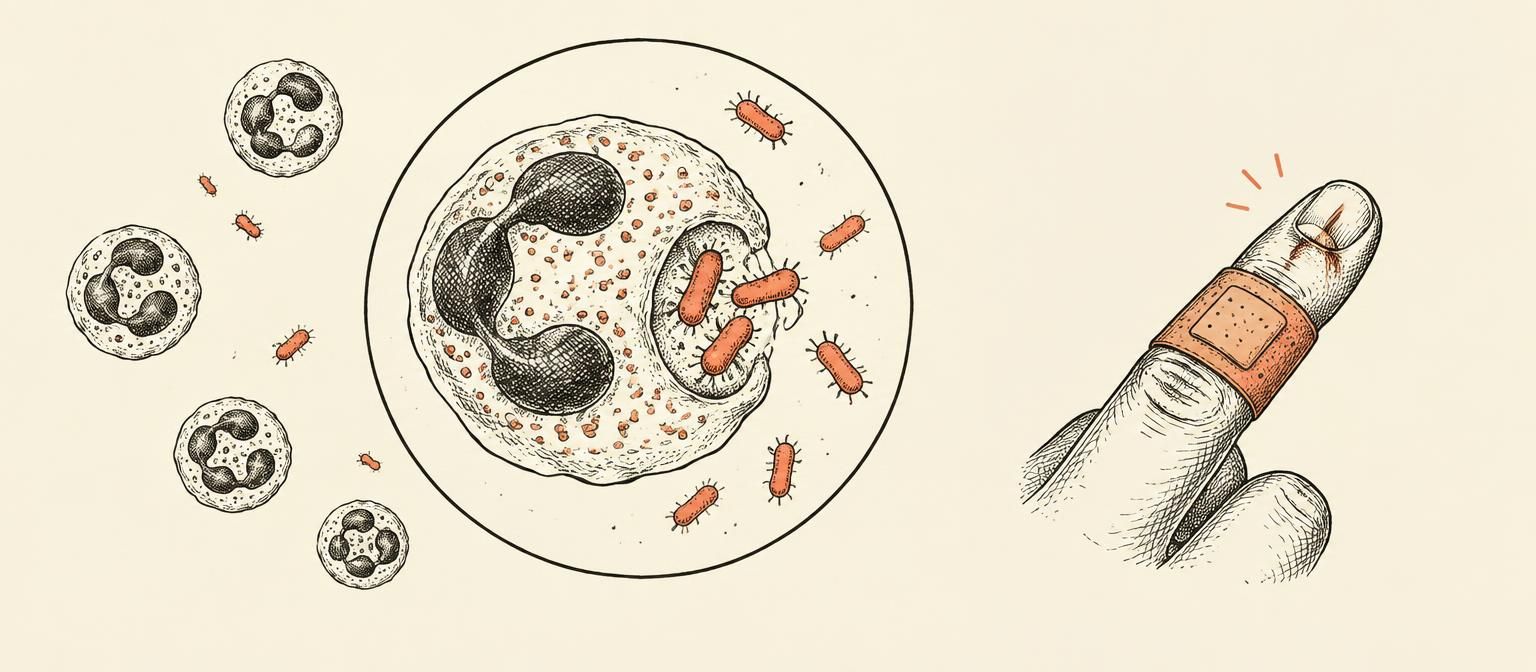
Can neutrophil counts help predict risk in lung-scarring diseases?
Counts above 5,600 cells per microliter were linked to death or lung transplant in people with lung-scarring diseases.
Researchers looked back at blood tests from people with interstitial lung diseases. These diseases can cause lung inflammation or scarring. They studied Neutrophils (Absolute), a count of infection-fighting cells, at diagnosis. The first group included 369 people, with a middle age of 67. Their middle follow-up time was 20 months.
The team then checked the finding in a separate group of 696 people. That group had a middle age of 66 and 60 months of follow-up. The same cutoff—5,600 cells per microliter—helped identify higher risk in both groups. The link held after researchers accounted for other factors. The source did not report how much higher the risk was.
There was an important exception. The count did not predict outcomes in lung disease tied to connective tissue diseases. These are illnesses affecting the body's supporting tissues. Platelets below 149,000 cells per microliter were also linked to worse outcomes. But only the neutrophil count independently predicted risk in the first group.
For BioSocial members, context matters more than a cutoff alone. This study covered people already diagnosed with these lung diseases. It did not establish a danger threshold for otherwise healthy people. It also did not show that lowering the count improves outcomes.
When comparing bloodwork with the community, dates, units, and diagnosis context can make shared numbers more useful. A single result cannot tell the whole story.
What patterns have you noticed in your own counts across blood tests?
Comments
No comments yet.